
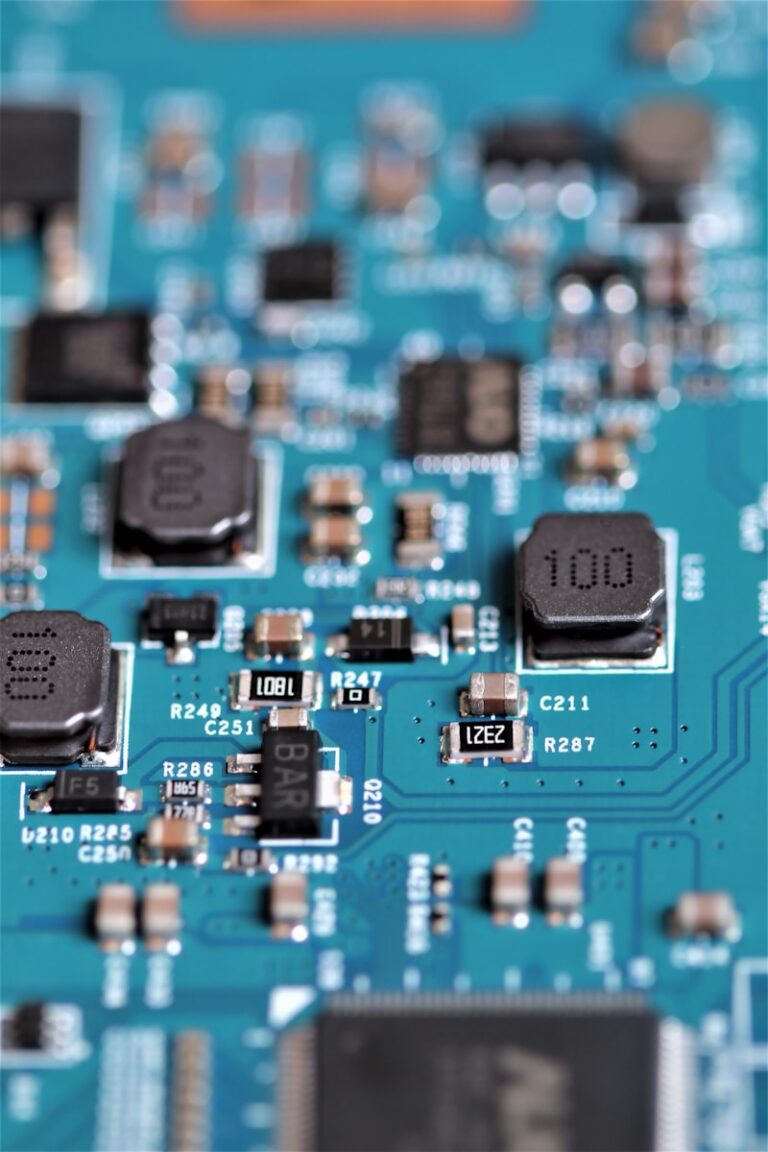

The transition to lead-free PCB assembly has reshaped modern electronics manufacturing. What began as a regulatory requirement has evolved into a benchmark for process control, environmental responsibility, and product reliability. Today, lead-free assembly is not simply about replacing solder alloys—it requires tighter tolerances, deeper engineering expertise, and stricter quality management.
At PCBasic, which is a reliable Chinese PCB assembly manufacturer, lead-free PCB assembly is engineered as a high-precision manufacturing system, supporting applications where reliability, consistency, and compliance are non-negotiable.
Lead-Free Assembly: More Than a Material Change
Switching from traditional tin-lead solder to lead-free alloys significantly alters the entire assembly process. Lead-free solders operate at higher temperatures, have different wetting behavior, and are less forgiving of process variation. As a result, assembly quality depends heavily on:
- Accurate thermal profiling
- Controlled solder paste deposition
- Stable component placement accuracy
- Consistent inspection and feedback loops
Without these controls, lead-free processes can introduce risks such as insufficient wetting, solder joint brittleness, or thermal stress on components.
Engineering Challenges in Lead-Free PCB Assembly
Higher Reflow Temperatures
Lead-free alloys require higher peak temperatures, increasing the risk of PCB warpage, component damage, and uneven solder joints if not properly managed.
Narrower Process Window
Compared to leaded solder, lead-free processes allow less margin for error. Small deviations in paste volume, placement accuracy, or temperature ramp rates can directly affect joint reliability.
Material Compatibility
Surface finishes, PCB laminates, and component terminations must all be compatible with lead-free soldering to avoid defects such as poor wetting or intermetallic failures.
These challenges make lead-free assembly a true test of a manufacturer’s technical capability.
PCBasic’s Lead-Free Process Control Strategy
PCBasic addresses lead-free assembly challenges through a combination of engineering discipline and system-level quality control.
Dedicated Lead-Free Production Lines
All SMT and through-hole processes operate in a controlled lead-free environment, minimizing contamination risks and ensuring consistent compliance across every batch.
Optimized Reflow Profile Management
Each project is supported by customized reflow profiles based on PCB thickness, component density, and thermal sensitivity. This ensures uniform solder joint formation while protecting heat-sensitive components.
Data-Driven Inspection and Feedback
Inspection data from SPI, AOI, and X-ray systems is used to fine-tune upstream processes, reducing defect rates and improving first-pass yield in lead-free production.
Skilled Manual Soldering Support
For areas unsuitable for full automation, experienced technicians perform lead-free manual soldering with controlled heat input, ensuring stable joints without damaging nearby components.
Quality Assurance for Lead-Free PCB Assembly
Quality control is critical in lead-free manufacturing due to the tighter process margins. PCBasic applies a multi-layer inspection system that includes:
- Incoming material verification for lead-free compliance
- Solder paste inspection before reflow
- Automated optical inspection after soldering
- X-ray inspection for hidden joints such as BGAs and QFNs
- Functional and electrical testing based on product requirements
All inspection results are documented and traceable, supporting consistent quality across prototype and mass production orders.
Applications Requiring High-Reliability Lead-Free Assembly
PCBasic’s lead-free PCB assembly services are widely used in applications where long-term stability and compliance are critical, including:
- Industrial control and automation systems
- Automotive electronics
- Medical and healthcare devices
- Power management and energy systems
- Communication and IoT hardware
In these fields, lead-free assembly must deliver both environmental compliance and mechanical reliability over extended operating lifecycles.
Why Choose PCBasic for Lead-Free PCB Assembly?
PCBasic combines manufacturing scale with engineering depth, offering:
- Mature lead-free SMT and THT production lines
- Strict material and process control systems
- Support for IPC Class 2 and Class 3 assembly requirements
- Flexible capacity for prototypes, small batches, and mass production
- One-stop services covering PCB fabrication, assembly, testing, and delivery
This integrated approach reduces production risk while ensuring stable and repeatable lead-free assembly results.
Conclusion
Lead-free PCB assembly is no longer a simple compliance checkbox—it is a reflection of a manufacturer’s technical maturity and quality discipline. Achieving consistent, reliable lead-free results requires precise process control, experienced engineering, and a robust inspection framework.
At PCBasic, lead-free PCB assembly is built on these principles. By combining advanced manufacturing systems with strict quality assurance, PCBasic enables customers to deliver environmentally compliant, high-reliability electronics with confidence.

0 Comments