
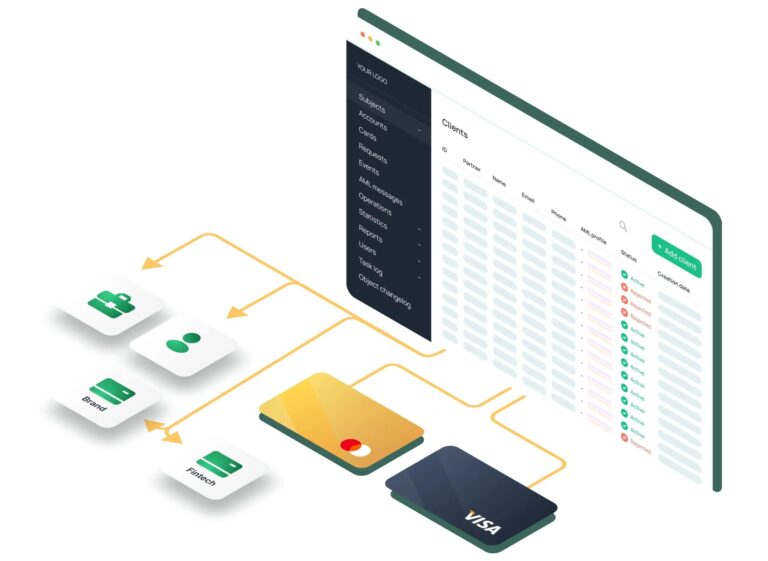

As long as you run a single, narrowly scoped card programme, the model looks tidy: one provider, one dashboard, plastic flows out, cards come to life, and the first KPIs look fine. Scaling breaks that illusion. New markets add different issuer appetites for risk, regulators enforce SCA in uneven ways, and tokenisation rules vary by scheme and wallet. Fraud pressure also arrives in waves, often right when your volumes spike. The “programme as a service” promise—outsource the hard parts and focus on growth—quietly becomes a bottleneck. You’re locked into someone else’s defaults for lifecycle events, limits, and authentication. When authorisations dip or disputes climb, you don’t need a hero; you need levers. That shift—from a packaged service to a controllable software layer—is what turns card issuing into a durable part of your payments stack rather than a recurring source of surprises.
Issuer Processing as a Product Layer
Treating issuer processing as software means you operate a control plane with clear contracts (APIs), observable outcomes (events, logs, KPIs), and rules you can change without waiting on a vendor roadmap. In practice, many teams formalise that layer through a card lifecycle management platform that encodes policies—issuance, activation, limits, tokens—as versioned rules rather than vendor tickets. The aim isn’t to rebuild the schemes; it’s to own the policies that govern how your cards behave in the real world.
From service to software
A “service” comes with fixed workflows and global toggles. A software layer exposes granular capabilities you can combine. You define business rules at the right scope (BIN, segment, region, merchant category, card status), version those rules, test them on a slice of traffic, measure impact, and roll back if needed. Idempotency and auditability stay first-class, so support and compliance don’t fight the tools. This is the difference between emailing support to “tighten ATM limits in LATAM” and updating a rule set that targets a specific set of MCCs, time windows, and risk scores—with the change logged, diffed, and measured.
Lifecycle APIs
Issuing isn’t just “create card.” The lifecycle is where operations succeed or fail: issuance and activation that can stage on KYC completion or funding verification; suspensions and reactivations with reason codes and expiries; re-issuance that preserves subscription continuity via token lifecycle; and status tracking with machine-friendly states and timestamps (issued → shipped → activated → suspended → closed) so every team—from support to finance—sees the same truth. Done well, lifecycle APIs reduce back-office churn: fewer ad-hoc tickets, fewer manual CSV patches, and faster time from incident to remediation.
Velocity and limits
Limits aren’t a single dial. You need layered controls that cooperate rather than collide: period caps that differ by channel and geography, distinct ATM ceilings with cooldowns, and more tolerant rules for offline environments such as in-flight or fuel pumps. As trust grows—completed KYC tiers, a stable device, a clean history—limits should rise automatically. The aim is to catch rapid-fire retries, suspicious MCC clusters or sudden cross-border jumps without blocking normal spend, which only works when limits are composable and explainable.
Network tokens
Tokenisation is not merely a security checkbox; it is revenue stability. Network tokens keep subscriptions alive when a PAN changes, carry stronger device signals that reduce false declines, and—where you also run acquiring—inform when to step-up, retry, or switch corridors. A consistent token strategy quietly removes soft declines from recurring and credential-on-file flows—the revenue leak most teams notice only after expansion. With that control plane defined, clarity on roles stops being a governance nicety and becomes the way you change outcomes safely.
Roles and Handoffs Across the Value Chain
A card programme only runs smoothly when each actor owns the right slice of responsibility. The BIN sponsor sits closest to the networks: they hold the licences, maintain scheme membership, and make sure the programme stays inside the rails—capital adequacy, operating rules, reporting cycles, audits. They aren’t your operations team; they’re the regulated umbrella that allows the product to exist. Good sponsors set clear guardrails, publish measurable requirements, and escalate issues through predictable channels rather than via ad-hoc exceptions. The programme manager is the commercial engine. They shape the proposition, acquire users, run distribution, and carry the day-to-day relationship with customers. In many teams they also handle frontline support, disputes triage, comms around card events, and merchant education. Where programme managers get into trouble is trying to “borrow” controls from a sponsor or processor that were never designed for their use cases—global toggles instead of scoped policies, manual tickets instead of APIs. Issuer processing is the software layer that connects those worlds. It’s where you actually encode how cards behave: lifecycle states, velocity and limits, stoplist/allowlist checks, token handling, authentication policy, and the event stream that keeps risk, support, and finance in sync. The processor exposes this as APIs and webhooks, with proper idempotency and audit trails, so the programme manager can change rules deliberately and the sponsor can verify compliance without guessing. In practice, it becomes the control plane that turns network and sponsor obligations into code you can observe and iterate. Boundaries matter because blurred accountability is expensive. If a spike in soft declines is treated as a “network issue,” no one owns the policy fix. If disputes age out because evidence was never attached, support blames the processor and the processor points back to the programme manager. Clear contracts prevent that spiral: the sponsor ensures the programme stays admissible; the programme manager owns the customer promise; the issuer processing layer provides the levers and the telemetry to make both workable. When those lines are explicit, you can introduce a new region, raise limits for a trusted segment, or change 3DS policy for specific MCCs without renegotiating the whole stack—or discovering after the fact that someone else silently changed a global switch. Once those boundaries are explicit, operations stop improvising and start relying on processor-emitted signals that make risk, support and finance move in step.
Operational and Risk Hygiene
Operational hygiene starts with a clean event stream. Every significant action—issuance, activation, token provisioning, limit changes, declines, chargebacks—should emit a structured event with stable fields, an idempotency key, and a timestamp. Webhooks push those events to the systems that need them: risk models, support consoles, finance reconciliation. When something goes wrong, an audit trail lets you reconstruct the timeline without guessing: which rule fired, which device was present, which cryptogram was used, who approved the override. Dispute workflows belong in the same stream. If evidence is gathered outside the processor, it gets lost; when it rides alongside the transaction history with immutable references, win rates improve and ageing cases stop slipping through the cracks. Rules only work if they’re specific and reversible. A temporary freeze should be a state transition with a reason code and an expiry, not a vague “lock” that support must undo manually. Stoplist and allowlist checks should evaluate consistently across channels—card-present, CNP, wallet—so a compromised merchant or device doesn’t sneak around a single weak interface. Unusual-activity alerts need context, not just thresholds: a cross-border purchase at 03:00 might be fine for a frequent traveller with recent tap-to-pay history nearby, but suspicious for a newly activated card with no local footprint. The processor’s job is to make these signals explicit and testable, so you can tune sensitivity without breaking everyday spend. The same principle reduces manual overhead. Velocity and limit checks should execute in milliseconds with clear reasons returned to the UI—“daily ATM ceiling exceeded” is actionable, “declined” is not. Fraud triggers work best when they are composable (MCC + time window + device reputation) and when exceptions are scoped (single card, BIN range, or segment) rather than global. Automating these paths does not remove humans; it reserves them for the cases where judgement matters. Support teams get playbooks tied to events (“freeze, request selfie match, then reissue token”), risk analysts get levers they can experiment with on a small slice of traffic, and compliance gets reports that line up with scheme expectations without spreadsheet archaeology. When monitoring, rules, and automation live in one observable plane, you stop firefighting and start iterating. Patterns emerge early—token failures after re-issuance, a surge in soft declines at a particular MCC, dispute letters missing the same field—and the fixes are policy updates, not escalation threads. That’s the everyday definition of resilience in issuer processing: fewer surprises, faster recovery, and far less work done by hand.
Regional Snapshots: What Changes in Practice
Expanding a card programme across regions is less about “turning on new countries” and more about re-authoring policy. The same card, in the hands of the same customer, will be judged differently by issuers and regulators depending on where and how it’s used. In the EU, PSD2 made strong customer authentication the default expectation. Exemptions (TRA, low-value, MIT, corporate) work, but only if your issuer-processing layer can label them precisely and pass the right flags through the chain. 3DS2 is assumed; step-up needs to be deliberate, with clear rules for when to challenge and when to lean on exemptions. Programmes that arrive with “global 3DS always on” either over-challenge or leak authorisations through unnecessary friction. Success here looks like policy that’s explainable: which transactions took an exemption, on what basis, and with what measured impact on fraud and authorisation rates. Across much of MENA, wallet penetration and network token adoption are uneven, onboarding to token services can be slower, and issuer models rely more on local heuristics. The practical effect is that recurring and credential-on-file transactions are less forgiving when PANs change, and step-up expectations differ by corridor. If your processor treats tokenisation as an afterthought, you’ll see silent breakage after re-issues or BIN changes. If it treats token provisioning and lifecycle as first-class (with retries and fallbacks), recurring revenue stays intact while you align to each market’s authentication posture. In LATAM, domestic rails and issuer behaviour shape outcomes as much as global schemes do. Local brands and routing preferences matter; acquirer fragmentation and instalment logic add complexity at the edge. Chargeback ratios can run higher in specific verticals, and issuer appetite for risk is often conservative on cross-border card-not-present until trust is earned. That means more emphasis on tokens that survive re-issuance, on MCC- and corridor-specific 3DS policies, and on velocity rules tuned to local spending patterns rather than imported from the EU or US. Programmes that copy “global defaults” tend to see avoidable soft declines and operational drag; ones that localise policy—down to BIN ranges and merchant clusters—recover authorisations without inviting fraud. The through-line is simple: policies, tokens, and authentication aren’t one-size-fits-all. Treat issuer processing as a control plane you can shape per region—flags, step-up rules, token lifecycles, dispute evidence templates—and the same product becomes predictable across very different markets. Treat it as a fixed service, and you’ll be debugging culture- and regulator-specific edge cases long after launch.
Conclusion: Card Issuing as a Control Plane
Card issuing is not a B2C “programme in a box.” It’s a controllable B2B software layer where policies, tokens, lifecycle states, and evidence are encoded—and observable. When that layer is treated as software rather than a fixed service, you gain levers you can actually pull: change a rule for one BIN range without touching another, step up authentication for a corridor without over-challenging elsewhere, and ensure subscription continuity via token lifecycle rather than relying on support workarounds. The payoffs are practical and compounding. Time-to-market shortens because launches become a configuration exercise, not a vendor negotiation. Compliance stops being episodic; audit trails, webhooks, and reasoned exemptions make adherence predictable. Authorisation rates climb across regions because limits, 3DS policy, and token handling reflect local realities instead of global defaults. Back-office fatigue drops as freezes, stoplist/allowlist checks, and velocity rules run automatically with clear, explainable outcomes. For an integrated take on this control plane, Boxopay provides issuer-processing software with lifecycle, token, and policy controls that complement the acquiring/gateway side. Together they form a payment control plane end-to-end: issuers and acquirers tuned by policy, measured by events, and improved deliberately rather than by guesswork. That is what turns expansion from a source of surprises into a repeatable operating rhythm.

0 Comments