
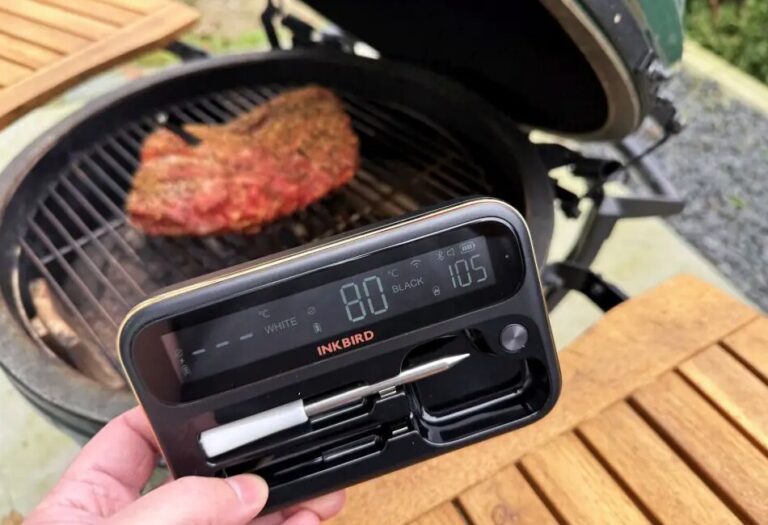

Walk into any professional kitchen today and you will notice something: the chefs are not hovering over the stove with timers. They are prepping, plating, and managing their stations while digital screens display exact temperatures for every dish in the oven.
This shift toward precision has been gradual in restaurants, but it is now arriving in home kitchens. And it is changing not just how we cook, but how we think about food.
What Precision Cooking Actually Means
Precision cooking is simple in concept: maintaining exact control over temperature throughout the cooking process. In practice, it represents a fundamental departure from traditional methods.
For generations, recipes gave us approximations. “Roast at 350°F for 20 minutes per pound.” “Cook until juices run clear.” These instructions assume every oven heats the same way, every cut of meat is identical, and every cook has the same intuition about when food is done. None of these assumptions are true.
Precision cooking removes the approximations. It relies on tools that measure what is actually happening inside the food, not what the recipe predicts should happen.
The core tool enabling this at home is the wireless thermometer. Unlike instant-read thermometers that require opening the oven and losing heat, a quality wireless probe stays inside the food throughout cooking. It transmits continuous temperature data to a device you can carry anywhere.
The INKBIRD Wireless Meat Thermometer represents this category well. It removes the constraint of standing by the oven, allowing the cook to monitor progress from another room while the equipment maintains accuracy.
Why Temperature Control Changes Everything
The difference temperature makes is not subtle. Proteins change structure at specific heat points. Collagen breaks down into gelatin between 160°F and 180°F. Meat fibers tighten and expel moisture above 150°F. A few degrees one way or the other determines whether a steak is tender or tough, whether a roast is juicy or dry.
Traditional methods cannot account for these thresholds consistently. An oven’s thermostat cycles on and off, creating temperature swings of 30 degrees or more. The surface of food heats faster than the interior. Without real-time data, the cook is essentially guessing.
Wireless monitoring solves this by providing continuous visibility. You see exactly when the internal temperature approaches your target. You know precisely when to pull the food from the heat. The guesswork disappears.
Practical Benefits for Everyday Cooking
For someone cooking regularly at home, precision tools offer three tangible advantages.
Consistency. When you know the exact finishing temperature that produced a perfect chicken breast last time, you can replicate it exactly next time. No more wondering whether the recipe worked because you got lucky or because you did something right.
Flexibility. Because you are not tied to the oven door, you can use cooking time for other things. Setting the table, finishing side dishes, or simply sitting down with guests becomes possible while the main course finishes uninterrupted.
Better results with less experience. A novice cook using temperature data will consistently outperform an experienced cook relying on instinct alone. The data does not lie about doneness, even when visual cues deceive.
The Equipment Matters
Not all thermometers perform the same way. Wired probes require running a cable through the oven door, which compromises the seal and lets heat escape. Basic wireless models have limited range or unreliable connections.
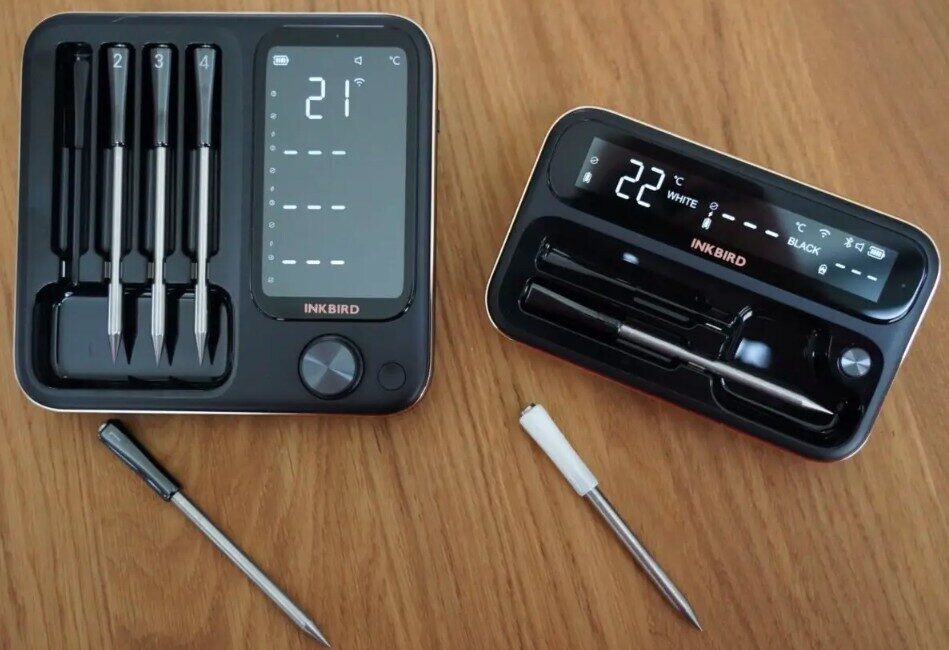
The INKBIRD Wireless Meat Thermometer addresses these limitations with a fully wireless design. The probe communicates through Bluetooth to a display unit or directly to a phone app, providing reliable monitoring from anywhere in the house. The temperature readings update continuously, and alarms trigger when targets are reached.
For the home cook who roasts regularly, smokes meat on a grill, or simply wants better results without more effort, this type of tool delivers immediate improvement.
A Practical Starting Point
If you are curious about bringing precision into your own cooking, you do not need to overhaul your kitchen or learn complicated techniques. Start with one change: stop relying on time-based recipes and start cooking to temperature.
The next time you roast a chicken or grill a steak, use a thermometer. Note the final temperature that produces the result you like. Next time, aim for that same number. You will likely find that your results become more consistent immediately.
From there, exploring techniques like reverse searing or low-temperature roasting becomes natural. You will have the data to understand what works and what does not.
Precision cooking is not about turning the kitchen into a laboratory. It is about using better information to make better food. And for anyone who cooks regularly, that is an idea worth considering.

0 Comments