

And How Creators Fix the Real Structural Problem
Every creator wants a viral video. Most never get one.
The common assumption is that virality depends on creativity or luck. In reality, most videos fail for structural reasons. They are not built to survive how modern platforms distribute content.
In 2026, viral videos are not accidents. They follow patterns that align with platform mechanics and viewer behavior.
This article explains why most videos never go viral and how creators use AI-driven workflows to fix the underlying problems.
The First Reason: Weak Early Motion Signals
Social feeds move fast. Viewers decide within seconds whether to stay or scroll. Static openings fail. Even strong ideas lose visibility if the first moment lacks motion. Platforms detect early engagement signals. Videos without immediate visual change receive fewer tests.
This is not a creativity issue. It is a structural mismatch.
Motion does not require complex animation. Subtle body movement, camera motion, or visual transitions are often enough. The problem is production cost. Recreating motion manually for every video is slow and exhausting.
This is where mimic motion changes the workflow.
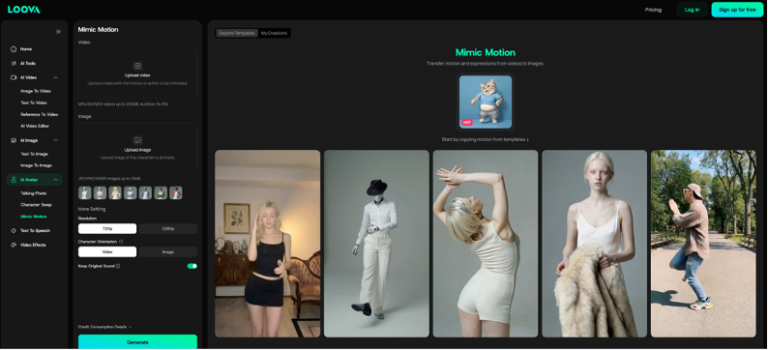
Mimic motion captures movement from reference clips and applies it to new visuals. Motion becomes reusable instead of performative. Creators reuse what works instead of recreating it.
Platforms like Loova integrate mimic motion into content pipelines, allowing creators to treat motion as a repeatable structure rather than a one-time effort.
The Second Reason: High Cognitive Load
Many videos ask too much from viewers. Dense explanations, long captions, or unclear visuals delay understanding. Viewers scroll before comprehension happens.
Viral videos reduce cognitive load. They deliver meaning quickly.
This is why compressed visual storytelling outperforms long explanations. Image-to-video and text-to-video formats convert ideas into visual sequences that are easier to process.
Compression is not oversimplification. It is clarity. Creators who understand this design videos for speed of understanding, not depth of information.
The Third Reason: No Loop Incentive
Platforms reward watch time. Completion matters less than replay behavior. Videos with clear endings often underperform. Viewers exit naturally.
Loop-friendly videos extend watch time without extra effort. The end connects smoothly to the beginning. Motion resets naturally.
Designing loops manually takes skill and time. Reusable motion patterns simplify this process. Mimic motion enables predictable pacing. Once a loop performs well, creators apply the same motion structure to future content.
Watch time increases without new filming.
The Fourth Reason: Late Execution
Timing determines reach. Trends have short lifespans. Early participation receives algorithmic testing. Late participation struggles regardless of quality.
Many creators miss trends because production takes too long.
AI-driven workflows reduce execution delay. Automated editing, motion reuse, and rapid generation allow creators to publish while trends are still active.
Speed is not a bonus. It is a requirement.
The Fifth Reason: One-Off Thinking
Most creators treat viral videos as isolated events. They celebrate the spike and move on. They rebuild from scratch for the next video.
This approach fails because it ignores what worked.
Viral elements include:
- Specific motion patterns
- Pacing structures
- Visual framing
- Narrative hooks
When these elements are reused, virality becomes repeatable. Systems outperform inspiration.
How AI Fixes the Structural Problem
AI tools matter because they reduce repetition cost.
Instead of asking creators to perform better, they remove friction:
- Motion reuse replaces repeated filming
- Automated editing replaces manual timelines
- Batch workflows replace single outputs
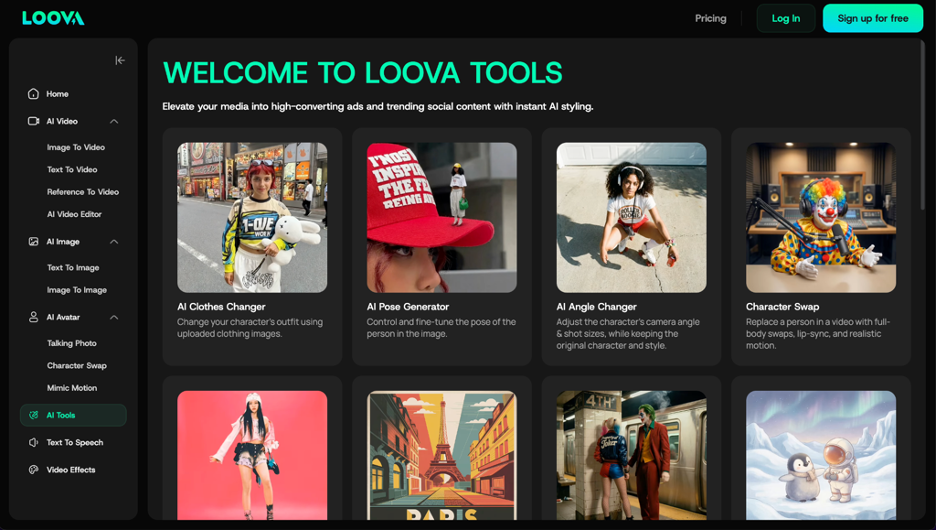
Loova consolidates these elements into a single workflow. Creators generate, adapt, and iterate without switching tools.
The result is consistency without burnout.
Why Structure Beats Creativity Over Time
Creativity creates peaks. Structure creates momentum.
Creators who rely on inspiration experience irregular growth. Creators with systems publish steadily and learn faster.
Algorithms reward reliability. AI does not replace creative thinking. It supports execution at scale.
Conclusion
Most videos do not fail because they are bad. They fail because they are structurally misaligned with how platforms distribute content.
Virality in 2026 depends on:
- Early motion
- Fast comprehension
- Loopable pacing
- Timely execution
- Reusable structures
AI-driven systems help creators fix these issues. Tools like Loova enable motion reuse through mimic motion, rapid iteration, and scalable production.
When structure improves, creativity finally gets a chance to spread.

0 Comments