

Introduction: The Quiet Revolution in the Countryside
Five years ago, many rural towns told the same story.
Boarded-up storefronts. Faded “For Sale” signs. A main street that went quiet after sunset. The local economy leaned on industries that no longer sustained families—logging, mining, or a single factory that had long since closed.
Today, the picture looks different.
Renovated barns host weekend guests. Farm-to-table cafés serve food grown within walking distance. Old silos become tasting rooms. City dwellers arrive not for jobs, but for something harder to find at home: silence, soil, and a sense of place.
This shift marks a deeper economic transition. Rural America is moving from extraction to connection. Instead of pulling resources out of the land, towns are inviting visitors to experience it.
But a problem remains. Unlike cities, rural attractions are spread out. The winery sits five miles from the cheese farm, which is another three miles from the Airbnb. Driving between them feels sterile—windows up, air conditioning on, disconnected from the landscape that visitors came to experience.
The next phase of rural tourism depends on a simple idea: quiet mobility.
The “Agri-Tourism” Boom: Why We Pay to Sleep in Barns
People don’t book farm stays because they lack hotels. They book them because they want intimacy with the land.
Guests want to wake up to roosters, not alarms. They want to see where food comes from, smell hay in the morning, and feed goats before breakfast. This is the psychology behind agri-tourism—and it commands a premium.
Yet access is often overlooked. Farms are large by design. Walking forty acres under the sun quickly turns from charming to exhausting. Driving a loud gas truck through fields does something worse: it scares livestock and breaks the calm that guests paid for.
This is where the electric dirt bike becomes an unexpected hospitality asset.
Quiet electric mobility allows guests to explore the “back forty” without sweat or disruption. They can ride to the creek, follow fence lines, and visit harvest areas without startling animals or feeling rushed. The experience remains immersive rather than intrusive.
In agri-tourism, silence isn’t a feature—it’s part of the product.
Creating the “Local Food Trail” Loop
Forward-thinking rural towns are no longer promoting single destinations. They’re creating loops.
A coffee roaster leads to a bakery. The bakery connects to an orchard. The orchard flows into a brewery or cider house. These food trails turn scattered businesses into a coherent experience.
Movement matters here. Tourists trapped in cars experience these stops as checkpoints. Tourists on bikes experience them as a journey.
Riding between stops, guests smell apple blossoms drifting from the fields. They feel the air cool near the riverbank. Gravel crunches under tires. A roadside stand appears, unplanned, and suddenly they stop—buying cider, jam, or fresh bread they never intended to purchase.
Economically, this matters. Cyclists stop more often than drivers. They linger longer. They spend incrementally but repeatedly. The result is a stronger micro-economy, where money circulates through multiple small businesses instead of passing through once.
The “Shared Journey”: Why Couples Drive the Market
Rural tourism is not dominated by solo travelers. It’s built around couples and young families.
Here’s where friction often appears. One partner loves cycling; the other doesn’t. Or they want to ride together, talk, and share the experience instead of struggling up hills separately. Traditional bikes force separation.
Shared mobility changes that dynamic.
When two people can ride together, the journey becomes social. Conversations continue. Views are shared. Decisions—stop here, go there—are made together. The ride becomes part of the memory, not just a way to reach it.
For rural tourism operators, enabling “two-up” travel isn’t a niche feature. It’s central to how most guests actually move.
Choosing the Right Fleet: The “Rural Cruiser”
This is the only place where hardware deserves attention—because operators think in terms of reliability, safety, and guest satisfaction.
Flimsy scooters fail on dirt roads. Lightweight city bikes struggle on gravel farm lanes. What’s needed is a robust electric motorcycle for adults built for utility and stability.
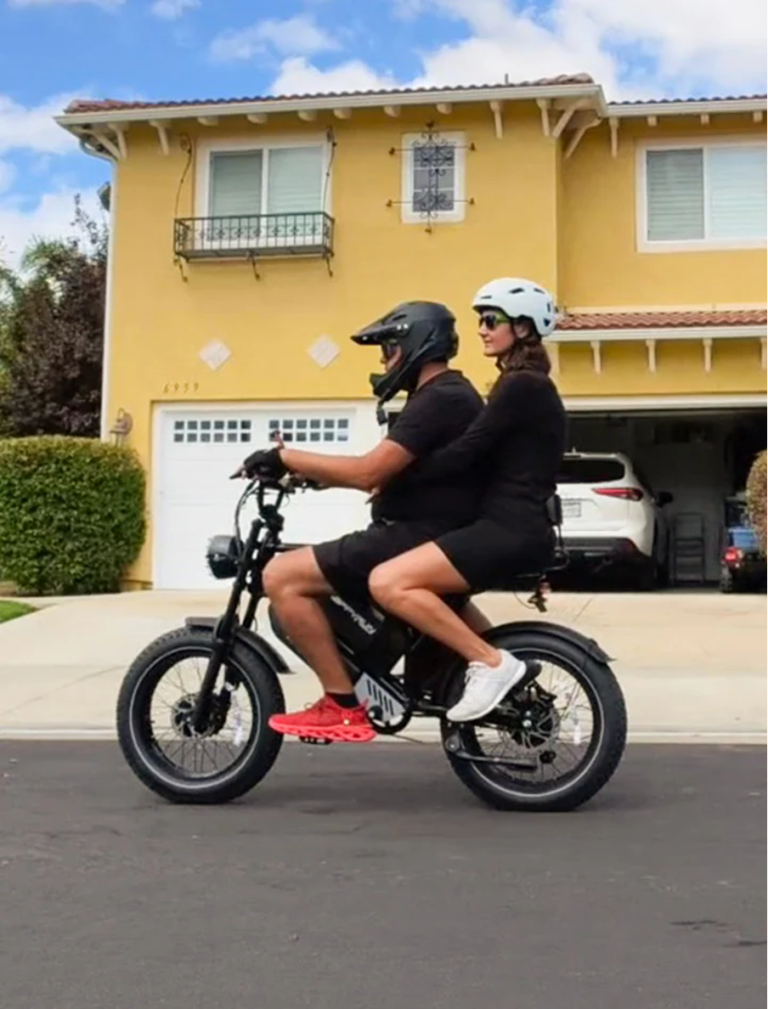
A strong example of this category is the HappyRun G70 Pro, often described by rural operators as a “town-to-farm connector.”
Its relevance to rural tourism is structural:
- Two-seater design allows couples to share one bike. This is both romantic and practical, reducing fleet size while increasing guest satisfaction.
- Dual motor system with 5,000W combined peak power provides the torque needed to move two adults and a backpack of wine bottles up a gravel incline. Combined peak power matters because it ensures stability and safety when starting on hills under load.
- Dual battery system (48V 33Ah) with up to 85 miles of range addresses real rural distances. Guests can complete an entire food trail loop without worrying about recharging.
- Fat tires increase safety on unpaved farm roads, pine needles, loose rocks, and damp soil—conditions common outside cities.
For operators, this isn’t about speed. It’s about uptime, confidence, and versatility.
Preserving the Peace: The “Quiet” Economy
Rural tourism only works if locals support it.
Gas ATVs and loud machines create conflict. Residents who moved—or stayed—for peace resent noisy visitors. Electric mobility offers a truce.
Silent bikes allow tourism to grow without raising tension. Visitors explore. Locals sleep. The landscape remains calm.
In the long run, this balance determines whether rural tourism thrives or burns out.
Conclusion: A New Way to See Old Places
Rural tourism is being reinvented—not through bigger attractions, but through better access.
Farm stays, food trails, and scenic loops succeed when visitors can move through the countryside slowly, quietly, and together. The destination still matters, but the journey defines the memory.
As towns invest in experience tourism, electric mobility becomes the missing link—connecting people to places without destroying what makes them special.
Support local towns. Choose slow travel. Rent an e-bike.
Go see the countryside the way it was meant to be experienced.

0 Comments