
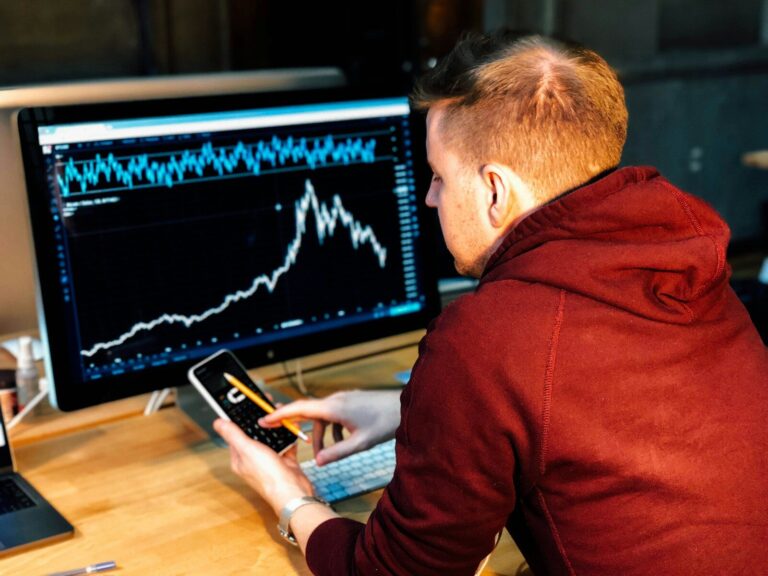

To trade synthetic indexes, you need to understand the risks, potential profit, and overall market exposure you may have. Synthetic indices offer traders the chance to trade with different levels of volatility, meaning successful risk management is needed for sustained long-term performance. Synthetic risk and reward indicators can help traders to assess what results they can expect from trades, find the best entry points, and set realistic profit targets. Thus, the integration of risk analysis into the trader’s strategy helps preserve their capital and encourages rational decision-making.
Here are the advantages of synthetic risk and reward indicators that help traders manage exposure:
Identify Potential Risks Before You Trade
It is critical to know what potential losses you may face before you enter a position. A synthetic risk and reward indicator provides traders with the ability to understand any possible losses by showing stop-loss levels, entry points, and market conditions that may affect the trade. This means traders can understand how this tool works by assessing their risks before entering a trade. For raw beginners, it is very important to know the synthetic risk-reward indicator definition and calculations, which make their trades more well-organized.
Analyzing Profit Opportunities
When you design a trading strategy, it is just as important to calculate its potential profitability. By comparing projected gains against possible losses, traders can use the synthetic risk and reward indicator to set realistic profit targets. This way, traders can check whether the setup has the right risk-to-reward ratio before making an investment. For example, a 3:1 ratio target may seem attractive, but it does not guarantee the trader will make a profit. The indicator of synthetic risk and reward is a valuable source. A synthetic risk and reward indicator on Investopedia connects them to broader trading knowledge about probability, profitability expectations, and risk management.
Improving Proper Execution for Capital Management
Another important aspect of any successful trading process is position size because an effective trading method can still prove to be unprofitable if the trader exposes too much money to market risks. That is why a synthetic risk and reward indicator can serve as a helpful guide for an appropriate position size in accordance with the account balance, stop-loss distance, and potential risk. It enables traders to restrict exposure in negative market conditions and saves traders’ money. You can check out Syntxwiki to access guides and honest broker reviews for Volatility, Boom and Cash, Jump, Step and X-Series indices.
Improved Trading Decisions
Trade indicators provide you with helpful information to make better decisions. They help traders to choose entry and exit points, assess risk, and assess quantitative trading opportunities. Reading guides such as the synthetic risk and reward indicator will help you, the reader, understand how these indicators work and how to use and calculate them. Traders also need to remember that past success is not a guarantee of future success, and synthetic risk and reward indicators are generated by an algorithm.
Keep a Consistent Risk Management Strategy
The key to long-term trading skills is consistency. A synthetic risk and reward indicator assists traders in sticking to rules instead of jumping to conclusions in volatile moments. Recording induces temperance, assessment of performance, and risk-to-reward ratios. It assists in the discovery of mistakes, modifying strategies, and is good for accountability.
Conclusion
A synthetic risk and reward indicator is a good way of putting yourself in better control of your different trading exposures and improving your capital management. Synthetic indices are better suited to traders who know what risks they are taking, what the realistic profit targets are going to be, and how they are going to calculate position sizes.

0 Comments