
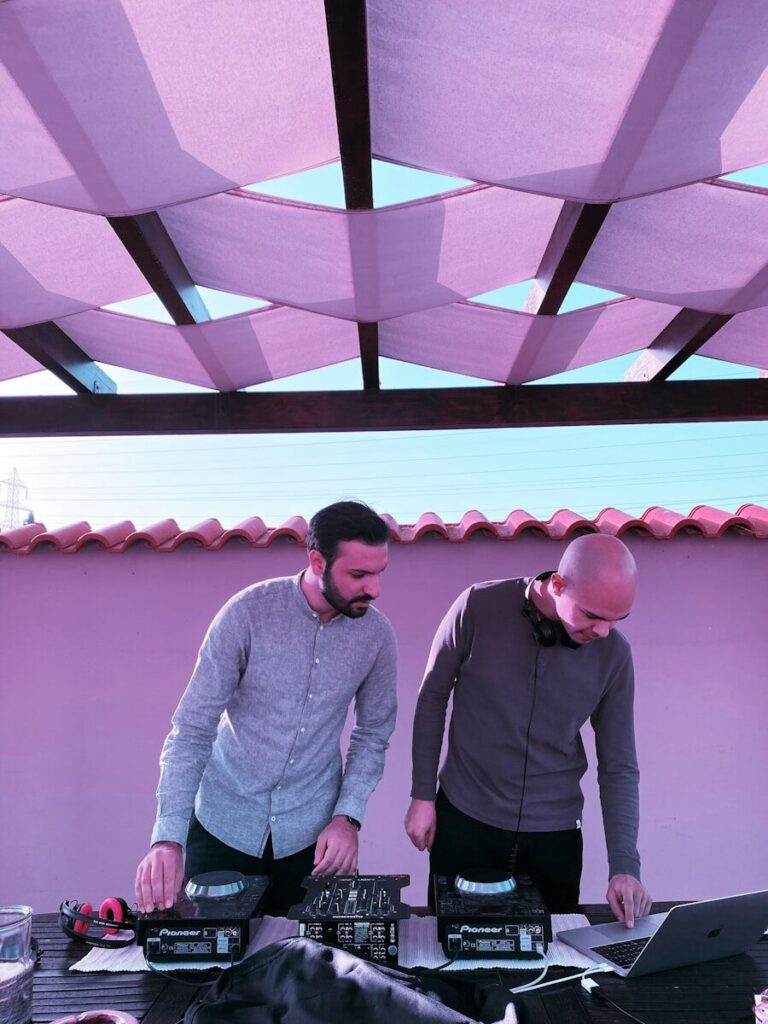

Music is present throughout the wedding day. It shapes the atmosphere, supports each part of the timeline, and keeps the energy moving. More than anything, it’s what guests notice and remember as the day unfolds. Yet, music is consistently one of the last decisions couples make regarding vendors, and one of the least thoroughly researched. The result is frequently a mismatch between what couples imagined and how the day actually sounds.
Visit Wezoree.com to explore how this guide exists to make that decision more deliberate. Choosing between a DJ and a live band has significant implications for the budget, atmosphere, and guest experience. Understanding the real differences is what allows couples to choose with confidence.
Why Music Matters: The Role of DJs and Live Bands
Wedding music serves several distinct functions, and the right choice depends on which of these functions matters most to you.
- Ceremony music — processional, ceremony underscore, recessional — requires precision timing and the ability to read the room. A missed cue here is visible to every guest.
- Cocktail hour music — ambient, conversational-level, setting the tone without dominating. This is where live music often creates its strongest impression: a jazz trio or string quartet during cocktail hour elevates the atmosphere in ways that even excellent DJ work cannot fully replicate.
- Dinner music — transitional, background-forward, allowing conversation while maintaining momentum. Volume calibration is critical; too loud or too quiet both create discomfort.
- Reception/dancing — the high-energy phase where most couples focus their entertainment decision. This is where the DJ vs. live band choice has its most significant practical implications.
A good place to start is deciding which part of the celebration matters most to you. If keeping the dance floor full is the priority, a DJ is often the better fit. If you care most about the mood during cocktail hour or dinner, live music can bring a very different kind of atmosphere. Many couples choose to combine both.
DJ vs. Live Band: Key Differences Explained
The choice between a DJ and a live band defines the physical flow and sensory energy of your reception. This breakdown compares the logistical and atmospheric differences to help you decide which format fits your venue and vision.
| Factor | DJ | Live Band |
| Music range | Effectively unlimited — any genre, any era, any tempo | Limited to the band’s repertoire and stylistic range |
| Sound consistency | Identical to original recordings | Live interpretation — variable, but potentially more emotionally resonant |
| Adaptability | Instant — can change direction in seconds | Requires a set break or transition; less instantaneous |
| Space requirement | Compact — table, equipment, small footprint | Significant — 4-piece band needs 15–20 sq meters minimum |
| Volume control | Precise | Less precise; acoustic instruments are especially harder to control |
| Visual impact | Minimal as a performance element | High — a live band is itself entertainment |
| Guest interaction | Varies by DJ style | Usually built in through performer presence |
| Typical cost range | $1,500–$8,000 | $4,000–$25,000+ |
| Travel logistics | Simple — one person, compact equipment | Complex — multiple people, instruments, equipment |
| Outdoor/acoustic suitability | Requires power and a sound system | Acoustic options available for intimate settings |
Pros and Cons of Hiring a DJ
Choosing between a DJ and a live band changes the entire energy of the reception. To help you decide, here is a breakdown of the practical benefits and the potential trade-offs of going with a DJ
Pros
Choosing a DJ offers a level of flexibility and control that is hard to match with a live band. Here are the primary advantages of this format:
- Wide musical range. A strong wedding DJ can move easily across decades and genres. If your guest list includes three generations with very different tastes, a DJ is usually the easiest way to keep everyone engaged.
- Precise adaptability. The ability to read a room and respond instantly is a genuine DJ skill. If a set of songs isn’t landing, a good DJ pivots immediately—no setlist commitment or band negotiation required.
- Compact logistics. One person, manageable equipment. For destination weddings, intimate venues, or celebrations where space is limited, a DJ is the practical solution.
- Cost efficiency. At equivalent quality levels, a DJ is consistently less expensive than a live band. The budget differential can be significant—$5,000–$15,000 in some markets.
- Ceremony precision. For processional timing and ceremony music cues, a DJ’s ability to control exactly when and how music starts, fades, and transitions is a genuine operational advantage.
Cons
However, this format does come with certain trade-offs that are important to consider before booking:
- Variable performance quality. Wedding DJing ranges from exceptional to genuinely poor, and portfolio content is harder to evaluate than a live band’s video. Evaluating mixing skills, song selection logic, and crowd-reading ability from recordings requires more effort.
- Limited visual presence. A DJ is not a performance element. Instead, they are present and working, but they don’t add to the visual character of the reception the way a live band does.
- Technical setup matters. A DJ depends entirely on their equipment, so if something goes wrong, it can affect the flow right away. With a live band, one technical issue is often less noticeable.
Pros and Cons of Booking a Live Band
Live music influences the atmosphere of a wedding. Here is a look at the impact a band has on the night and the logistical realities that come with it
Advantages
A live band brings a unique energy and performance element that transforms the music into a central part of the wedding experience. Here are the primary strengths of choosing live performers:
- Visual and atmospheric presence. A live band is an event within the event. A well-presented band performing with genuine energy adds a layer of atmosphere and entertainment that no recording can replicate. Guests interact with performers differently than they do with a DJ.
- Emotional resonance. There is something measurably different about hearing a live voice and instruments — the slight imperfections, the presence, the responsiveness to the room.
- Cocktail hour excellence. A jazz trio, string quartet, or acoustic duo during the cocktail hour and dinner transition is one of the most effective ways to elevate a reception’s perceived quality. This is arguably where live music delivers its strongest return on investment.
- Entertainment value. Guests experience live band receptions differently — they watch, they don’t just dance. The band becomes a conversation point and a shared experience in a way that DJ sets rarely do.
Challenges to Consider
While the energy of live music is unmatched, there are practical and financial factors that can complicate the planning process:
- Cost and logistics. A quality live band — consisting of four to seven musicians, equipment, travel, and accommodation for destination events — represents a substantial investment. For destination weddings especially, travel costs can add $3,000–$8,000 to the base fee.
- Repertoire constraints. Every band has a genre range and a repertoire limit. Requests outside that range simply aren’t possible. For couples with eclectic tastes or multi-generational guest lists, this is a genuine limitation.
- Space requirements. Most live bands require a dedicated performance area of significant size. This often eliminates them as an option for intimate venues or celebrations where floor space is limited.
- Set breaks. Standard live band contracts include set breaks (typically 15–20 minutes per hour). This requires either a playlist solution or coordination with a DJ for hybrid coverage.
Tips for Choosing the Perfect Music Experience
Choosing the right music depends on how the musician manages the live event, not just on their best videos. Here’s how to evaluate candidates and make sure the logistics match your vision
Evaluate DJs By Their Decision-Making, Not Their Tracklist
Don’t settle for a 60-second highlight reel. Request documentation of an actual event across its full arc. The transitions, the pacing, and the navigation between genres are where a DJ’s skill becomes visible.
For Live Bands, Skip The Showreels
Watch full, unedited performance videos. A polished 90-second clip only proves a band sounds good in a studio. A 20-minute live set tells you if they can maintain energy, interact with a crowd, and manage the room during the slower, more difficult moments.
Ask Specifically About The Destination Experience
A DJ who has never worked outside their home city will face genuine logistical hurdles at a Greek island venue or an Italian villa: power supply differences or local sound permits. You need documented experience in your target location.
Put The Ceremony Under A Microscope
Many vendors underestimate the precision it requires. Ask them directly: How do you handle processional timing? What happens if the walk needs to be extended? Who cues you, and how?
Get The Logistics In Writing Upfront
Clear the technical details in your contract early to avoid wedding-day surprises:
- Setup and soundcheck duration;
- Power and equipment requirements;
- Space footprint (critical for bands);
- Break schedule and coverage plan;
- Overtime terms and emergency backup plans (e.g., if a band member is unavailable).
Consider The Hybrid Model
The “DJ vs. Band” choice isn’t a binary trap. A string quartet for the ceremony and cocktail hour, followed by a DJ for the reception, is a gold-standard format. It combines the atmospheric weight of live performance with the sheer range and flexibility of a DJ.
Budgeting for Wedding Entertainment
Entertainment budgets vary significantly by market, vendor tier, and celebration format. These ranges reflect 2026 market rates across Wezoree’s destination network:
| Entertainment Type | Budget Range | Notes |
| DJ (local market) | $1,500–$4,000 | Within a couple’s home country |
| DJ (destination) | $3,000–$8,000 | Plus travel, accommodation |
| Acoustic duo/trio (ceremony + cocktail) | $2,000–$6,000 | String, jazz, or acoustic |
| Live band (4–5 piece, local) | $4,000–$12,000 | Full reception coverage |
| Live band (4–5 piece, destination) | $8,000–$25,000+ | Travel significantly increases cost |
| Hybrid: live + DJ | $5,000–$20,000 | Most common premium format |
Entertainment typically represents 5–10% of the total wedding budget at mid-range spend levels, and 8–12% in celebrations where music quality is a stated priority. The single most common budgeting error is underestimating destination travel costs for entertainment vendors — particularly for bands, where multiple people and instruments require flights, accommodation, and potentially equipment shipping.
When comparing DJ and band quotes, ensure you’re comparing equivalent quality tiers. A high-end destination DJ and a mid-tier local band are not comparable options — they represent different quality and experience levels that happen to overlap in price.
Making Your Celebration Unforgettable
The choice between a DJ and a live band has no universal answer. It comes down to a realistic look at your vision, your venue’s limits, and your budget. Ultimately, the best option is whichever professional can prove they have the skills to deliver the experience you want.
The most successful weddings share a common thread: the couples treated entertainment with the same rigor they applied to venue selection. They demanded documentation, interrogated the logistics, and chose based on demonstrated competence.
Wezoree’s vendor profiles are built to support this level of evaluation. Between portfolio documentation, editorial interviews, and Real Wedding links, you have the grounded information needed to choose with confidence. The right music for your wedding exists. Don’t rely on luck; instead, examine the options thoroughly.

0 Comments